Storm damage cleanup in Colorado Springs starts by closing the hole
Wind lifts a run of shingles. Hail cracks a skylight. A limb comes through the garage roof. This guide walks you through the next 48 hours: tarps, plywood, drying, and what to settle before anyone signs anything.
Colorado Springs, 6,035 ftPikes Peak, 14,115 ft
Draft preview. “Colorado Springs Storm Cleanup” is a working name for this website. It is not a registered or verified business, and it is not affiliated with any other company. Until an operator, service area and contact details are verified, this site accepts no calls, messages or form requests.
The first hour after the storm passes
-
Keep everyone away from downed power lines and report them to the utility. Treat every wire as live.
-
Stay off the roof. Photograph the damage from the ground and from inside, with the date visible.
-
Put buckets and towels under active drips and move furniture, rugs and electronics out of the way.
-
Call your insurer first. Then book tarping and board-up with a contractor you have checked out yourself.
If anyone is hurt or a gas line is damaged, leave the building and call 911 before anything on this page.
Seal it tonight. Repair it once the claim is clear.
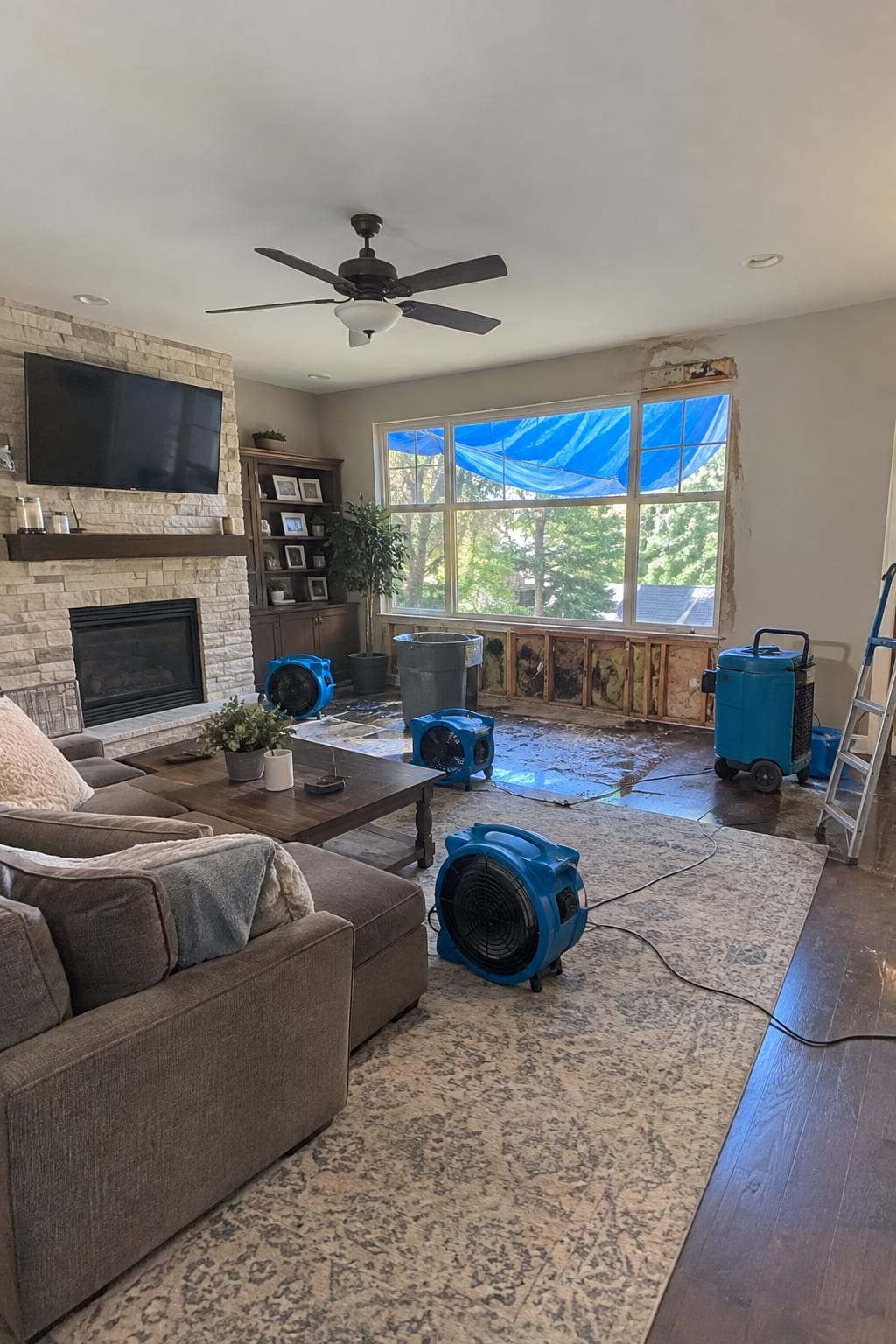
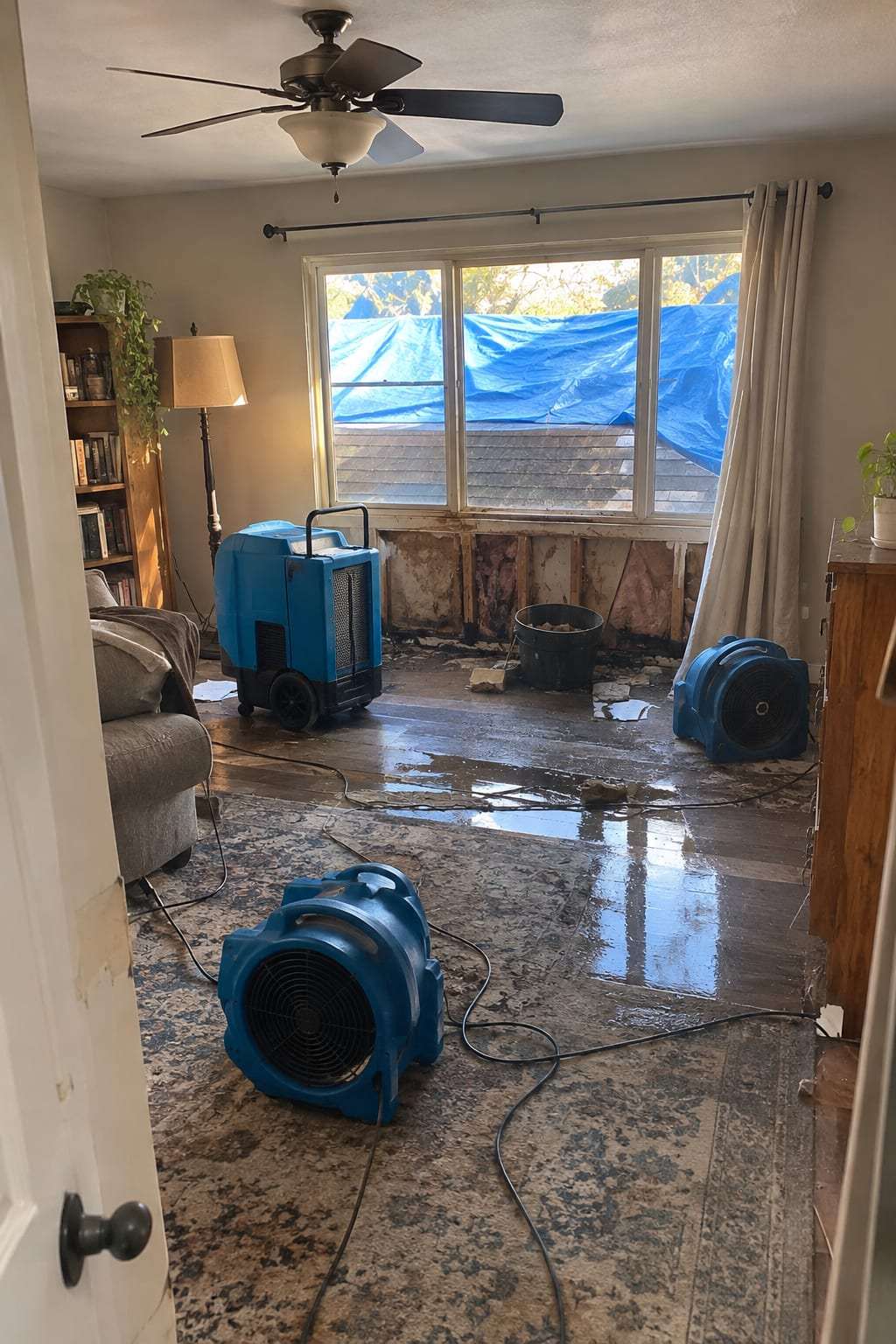
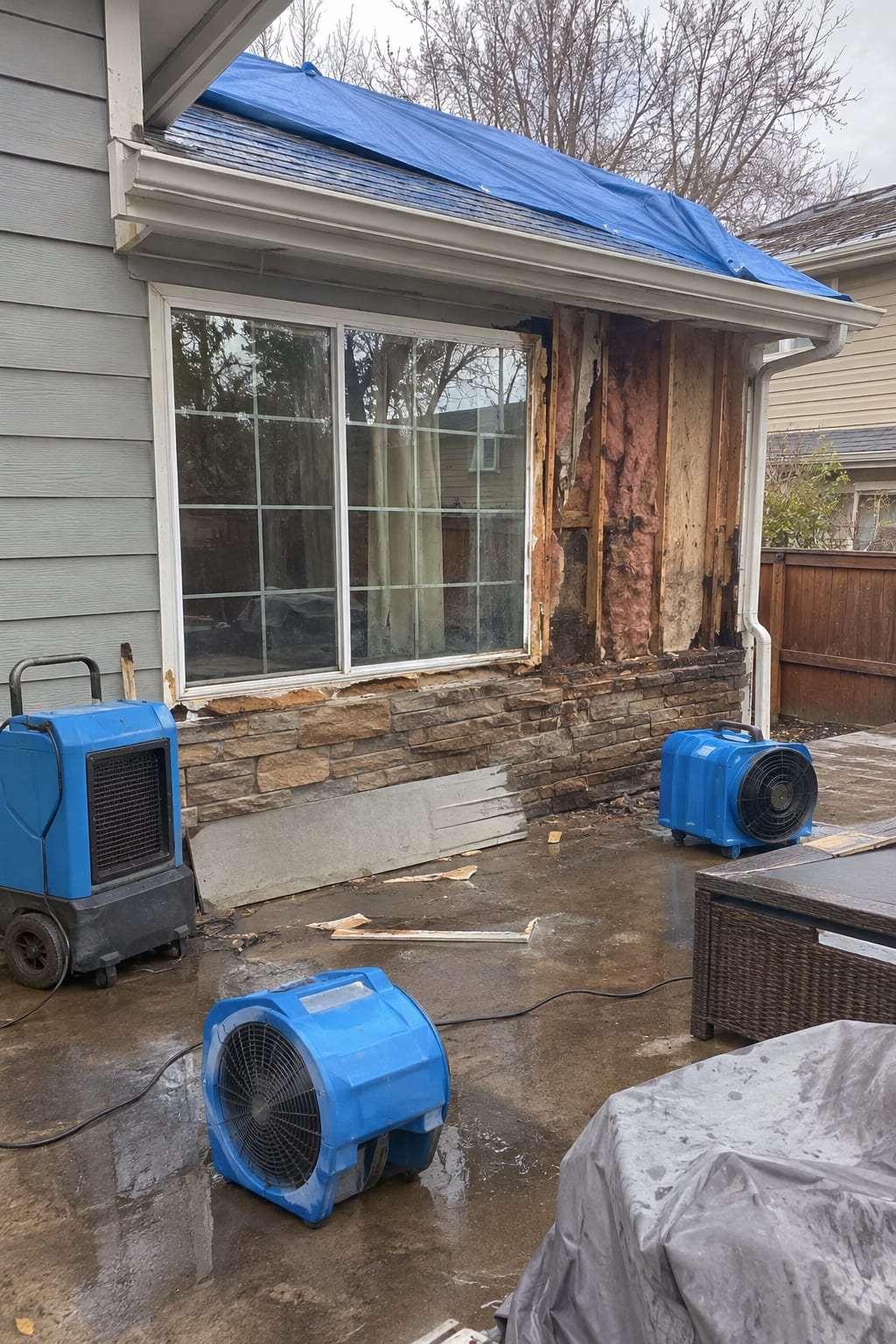
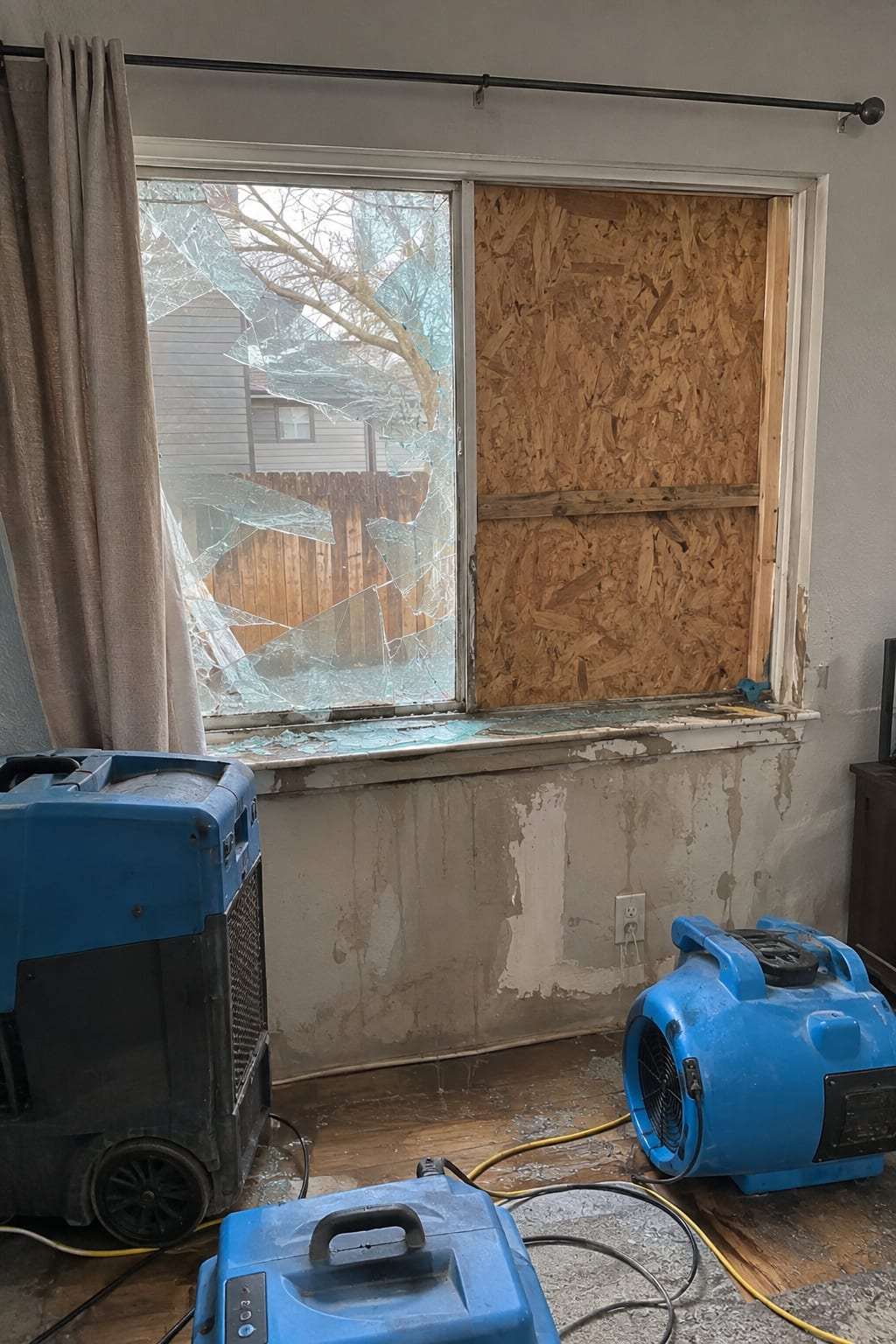
Storms break buildings from the outside in. Wind peels back a roof section, hail punches through a window or skylight, a limb opens the decking. The longer that opening stays uncovered, the more rain and snowmelt reach the insulation, drywall and floors, and a roof repair grows into a water loss.
So the work runs in a fixed order. First a tarp on the roof and plywood over the openings, plus removal of any debris still pressing on the structure. Then extraction and drying for whatever water got inside. Permanent repairs come last. Some contractors handle all three stages and some handle one, so ask a provider which stages they take on before you hire them.
Three answers to get in writing
Before anyone tarps, boards or tears out drywall, get three answers in writing: where the crew is based, when it can arrive, and exactly what the emergency work covers.
Five stages, in this order
Most policies expect you to take reasonable steps to stop further damage, so stabilization is the part that cannot wait for an adjuster.
-
Stabilize
A crew tarps the roof openings, boards broken windows and doors, and secures the property.
-
Clear debris
Limbs and storm debris come off and away from the structure where that can be done safely.
-
Dry the inside
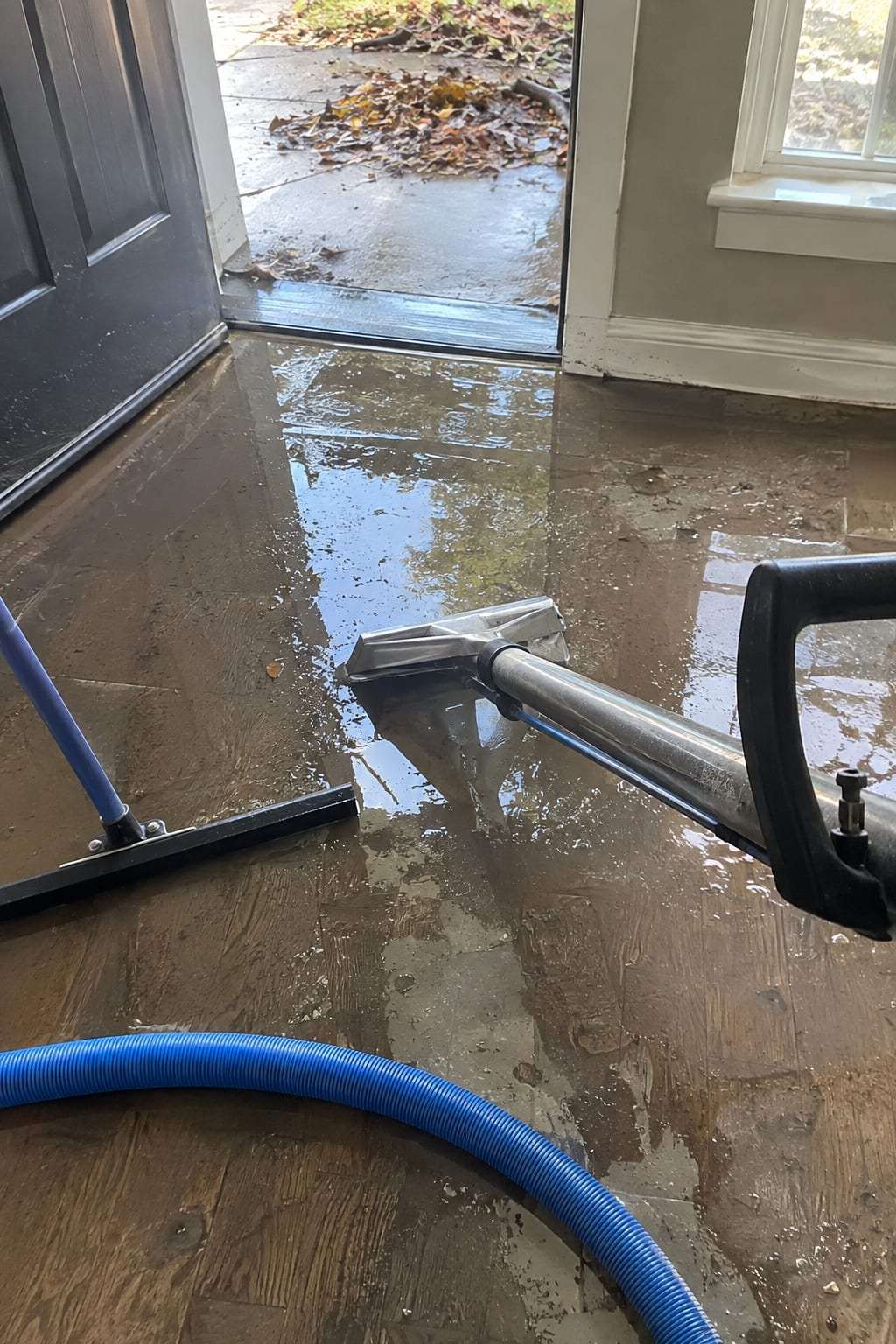
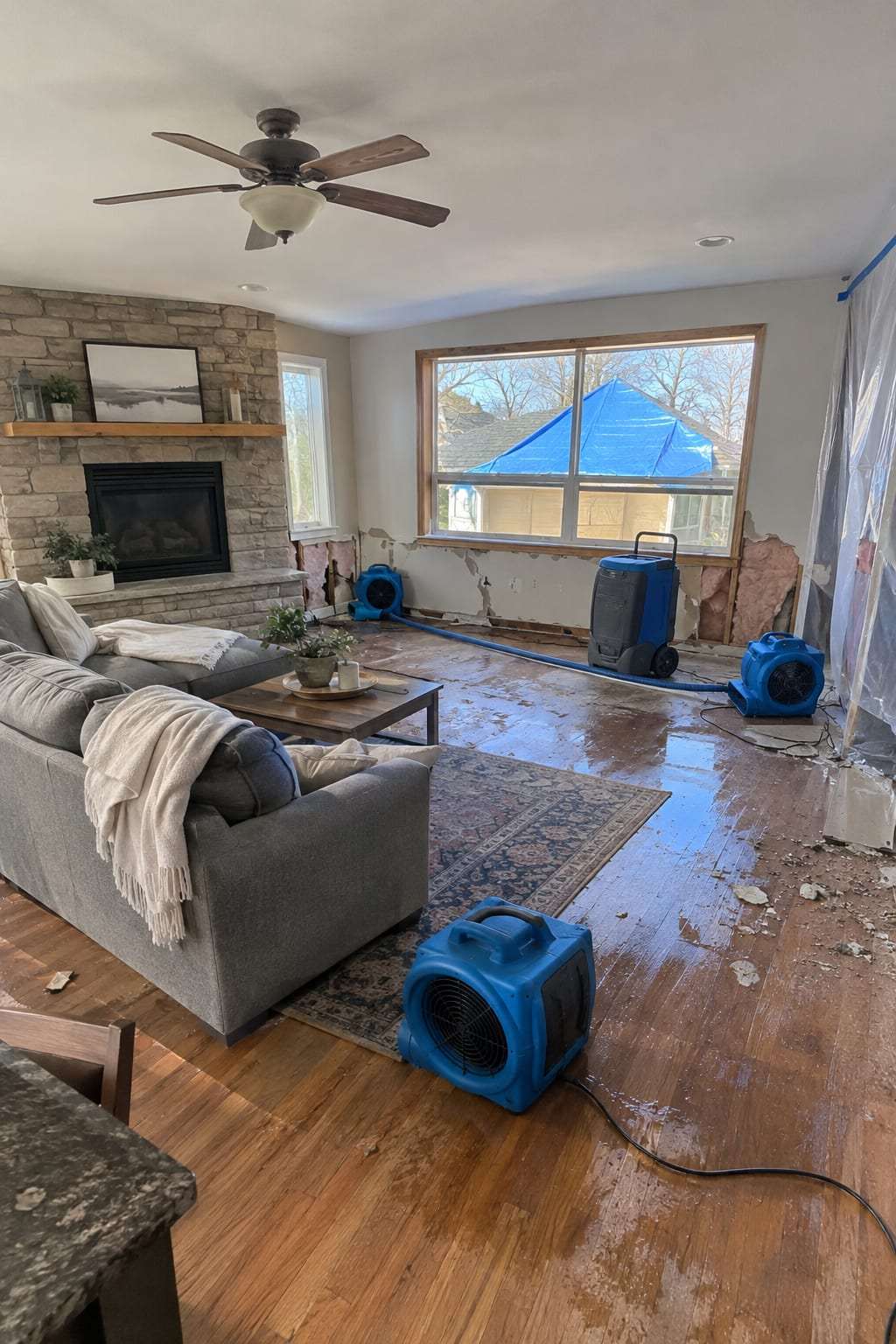
Standing water gets extracted, then ceilings, insulation, walls and floors are dried out.
-
Document
Damage gets photographed and written up for the claim. Ask for your own copies.
-
Repair
Structure, interiors and finishes get repaired once the claim and scope are settled.
Walk the property and look for
- Shingles that are missing, lifted or creased, and branches or debris lying on the roof.
- Cracked windows or skylights, and dents in gutters, downspouts and roof vents.
- New stains on ceilings, or damp spots in the attic after the next rain.
- Torn siding, flattened fence sections, or a limb resting on the house.
- Wet insulation or darkened sheathing around vents, chimneys and other roof openings.
A tarp buys time. It is not the repair.
Emergency storm work starts with tarps and plywood. Their only job is to keep rain and snow out of a roof opening, a broken window or a hole left by a limb, so the damage stops growing while the claim and repair plan come together.
Drying and interior cleanup start once the building is closed in. Replacing the roof is a separate decision. Ask whether the emergency contractor will do that work or hand it to a roofing contractor, and get the answer in writing either way.
After hail, expect someone at the door
Large hail events draw out-of-area contractors who canvass whole neighborhoods, sometimes before the storm has cleared. Some do good work. Some take a deposit and leave town. These five checks protect you either way.
Before you sign with anyone
- Get the company's full name, street address and phone number, and look them up yourself.
- Ask for proof of insurance and any license your city requires for the work.
- Read any agreement that assigns your insurance benefits to the contractor, start to finish, before you sign it.
- Pay no large cash deposit. Turn down any offer to cover your deductible: that can be insurance fraud.
- Call your insurer before you agree to anything beyond emergency protection.
Weather at the foot of Pikes Peak
Colorado Springs sits at the base of Pikes Peak, and the weather turns fast. Spring and summer storms bring hail, and the Front Range ranks among the most hail-prone regions in the country. Winter brings downslope winds that come off the mountains in damaging gusts. Wet spring snow loads roofs and snaps limbs.
Some storm contractors working in El Paso County live here. Others drive in from Denver or from out of state after a big event. Ask where a crew is based. After a widespread storm, tarping and board-up crews book up quickly, so call early.
- Ask any contractor for a physical address, then look it up yourself.
- Check door-to-door contractors with the Pikes Peak Regional Building Department before you agree to anything.
- Keep every photo and receipt for emergency work. Insurers generally expect reasonable steps to prevent further damage.
- The same advice holds in Manitou Springs, Fountain, Monument and nearby El Paso County towns.
ZIP codes served: 80903 (Colorado Springs), 80905 (Colorado Springs), 80909 (Colorado Springs), 80907 (Colorado Springs), 80910 (Colorado Springs), 80904 (Colorado Springs), 80918 (Colorado Springs), 80917 (Colorado Springs), 80915 (Colorado Springs), 80906 (Colorado Springs), 80914 (Colorado Springs), 80916 (Colorado Springs), 80919 (Colorado Springs), 80922 (Colorado Springs), 80923 (Colorado Springs), 80920 (Colorado Springs), 80951 (Colorado Springs), 80938 (Colorado Springs), 80924 (Colorado Springs), 80925 (Colorado Springs), 80927 (Colorado Springs), 80929 (Colorado Springs).
Also nearby: 80829, 80911, 80939, 80809, 80902, 80913, 80840, 80819, 80926, 80921, 80908, 80831.
Read deeper, one storm problem at a time
Storm damage guides, claim tools and service area notes for the first days after hail, wind or a fallen tree.
- Storm Damage
These explainers take one storm problem at a time: wind that peels shingles in January, hail that bruises a roof without leaking, heavy April snow that snaps limbs, and July cloudbursts that push water toward a walkout basement.
- Claim Tools
Use these planning tools before and after a storm.
- Service Area
A brick Victorian near downtown, a 1990s two-story on the open east side and a cabin-style home in the Tri-Lakes pines meet the same storm very differently.
Frequently Asked Questions
Expect three questions: what broke, whether water is still getting in, and whether anyone is in danger. Tarping or board-up usually comes first, then someone assesses the interior. Get the scope and price of the emergency work in writing before the crew starts.
Is emergency tarping covered by insurance?
Many policies cover reasonable emergency steps that protect the property after a covered loss, and tarping and board-up usually qualify. Keep the invoice and your photos, and confirm the details with your insurer.
How long can a roof tarp stay on?
A tarp is a stopgap meant to hold until permanent repairs. Depending on the weather and how well it was fastened, that is often a few weeks to a few months.
Should I get my roof inspected after every hailstorm?
After a significant hail event, yes, even with no leaks. Hail can bruise shingles in ways you cannot see from the ground, and that damage shortens the roof's life.
What if water got into my attic insulation?
Have it checked. Saturated loose-fill and batt insulation is often pulled out and replaced so the attic can dry before mold gets started.
How do I avoid storm-chasing contractors?
Check licensing with the Pikes Peak Regional Building Department, ask for references, refuse large upfront payments, and read any form that assigns your insurance benefits before you sign it.
Is commercial storm damage handled differently?
Often. Commercial and large-loss jobs take more equipment and more coordination with tenants and daily operations. Ask whether a provider takes on commercial work at your scale.
Is an emergency roof tarp the same as a roof repair?
No. A tarp keeps water out until permanent repairs are scoped and approved, and most policies expect you to take reasonable steps like that to stop further damage. Ask whoever tarps the roof whether the permanent repair is in their scope or goes to a roofing contractor.
Request a storm damage inspection
This form is not connected. This website is a draft preview: no business has been confirmed to receive requests, so the fields below are switched off and nothing can be sent. In an emergency, call 911.
If the storm just passed
Stay away from downed lines. Photograph the damage from the ground. Call your insurer, then pick a contractor you have checked to tarp and secure the property. If anyone is in immediate danger, call 911.